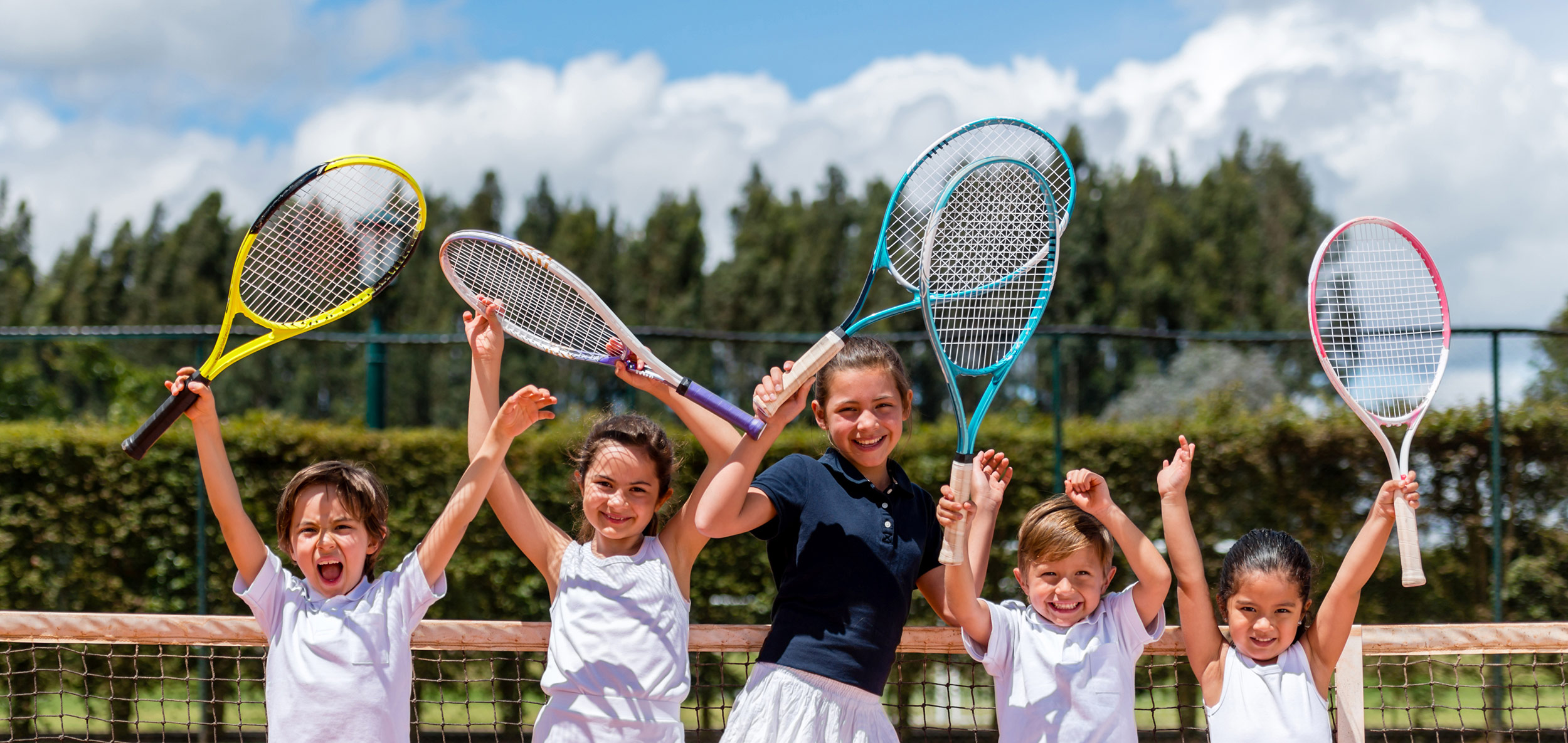
The Play & Stay Program promotes more technical and enjoyable learning.
In the field of formative tennis, the importance of adapting the playing space and equipment to the developmental characteristics of children is increasingly evident. The scalability of spaces, which involves reducing court size and ball speed according to age, has become a key tool to promote the technical-tactical learning of young players.
The ITF has promoted staged tennis since the Play & Stay program (2012) and various studies, such as those by Farrow and Reid (2010), Buszard et al. (2014), or Reid et al. (2018), have shown that these adaptations allow for longer and more realistic rallies, improve decision-making, and help develop more solid technical patterns. The red and orange stages, corresponding approximately to ages 3 to 8, are particularly sensitive to this approach, as this is when children begin to experience structured play. The use of slower balls and smaller courts makes it easier for them to focus on essential aspects such as positioning, the point of impact, and the tactical sense of each action.

Red
Ball
Ages 3 to 6
75% reduction
in bounce and speed


Orange
Ball
Ages 7 and 8
50% reduction
in bounce and speed


Orange
Ball
Ages 9 and 10
25% reduction
in bounce and speed


Yellow
Ball
Over 10 years old
0% reduction in bounce and speed

This approach to tennis instruction has also been clearly articulated in the book «Nuevas metodologías en el entrenamiento del tenis, modelo basado en la acción de juego» (Moreno & Baiget, 2024), where it is explained how play can be the starting point for technical, tactical, and conditional development, even from the earliest stages. This work advocates for a methodology that moves away from analytical training disconnected from play and opts for a natural progression based on real action, with space as a key pedagogical variable.
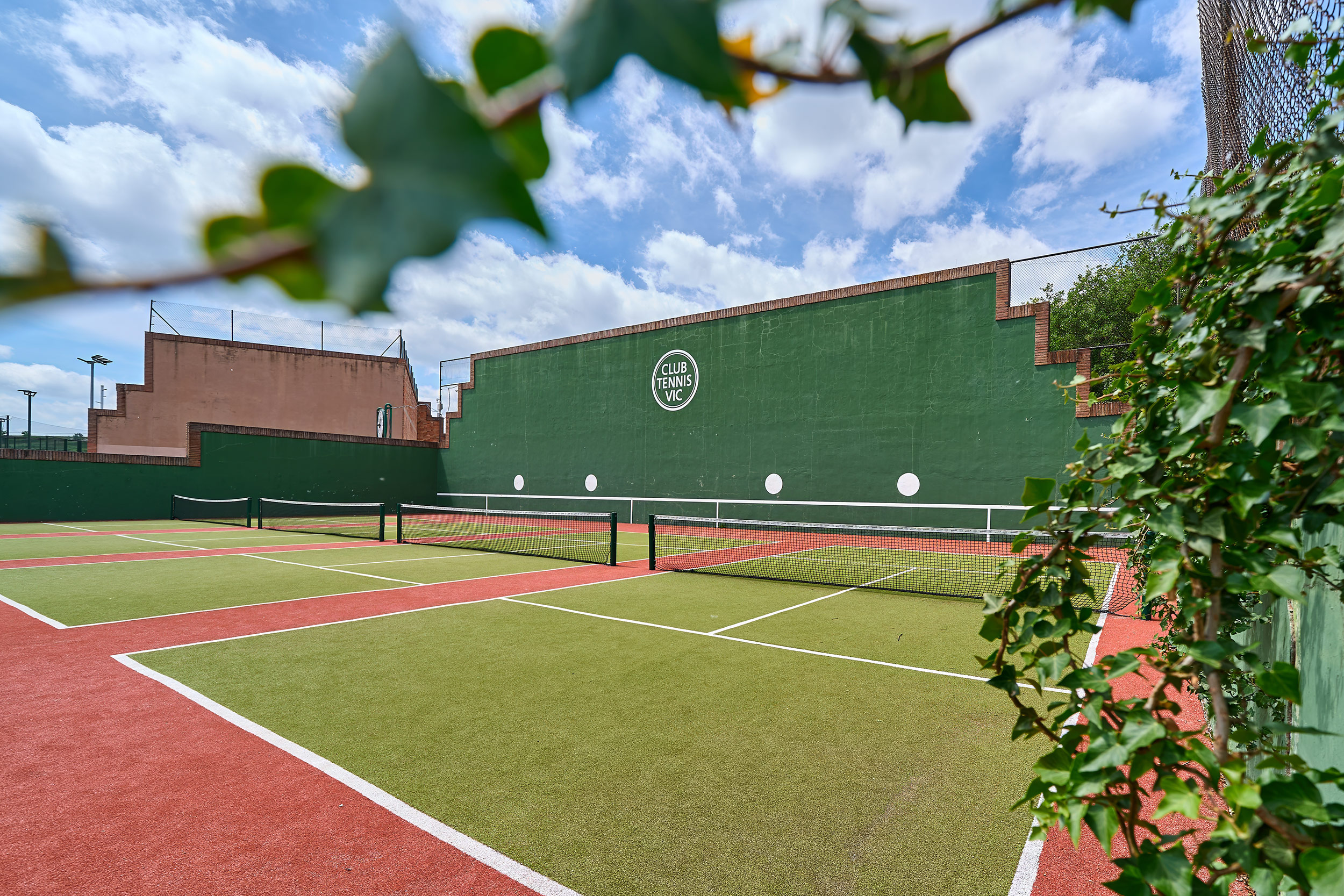
This approach has also been progressively integrated into many tennis clubs and schools, as well as in coach training. The Teaching Department of the Catalan Tennis Federation is promoting this vision, emphasizing training that is consistent with each child’s developmental stage and aligned with scientific evidence. Club Tennis Vic, for its part, has embraced this perspective with the construction of a Greencourt court for the orange stage, contributing to making the benefits of this scalability methodology visible in real contexts.
Without the need for premature specialization, which can be counterproductive, scaled tennis allows children to learn more and better, in a fun and safe way.
Proven benefits of staged adaptation in tennis
01
More fun
When equipment and space are adapted to age, the game flows and learning becomes fun.
02
More success
With slower balls and smaller courts, there are more rallies, more play, and more desire to continue!
03
More learning
Children learn faster, with more natural movements and meaningful actions.
04
Healthier and safer
Respecting the growth pace avoids overloads and reduces the risk of injuries.
05
More tactical intelligence
Reduced spaces force players to think better about each shot and make better decisions.
06
Better technique
From the point of impact to the grip, everything is built with more control and fewer errors.